What commercial refrigeration in Chilliwack actually looks like
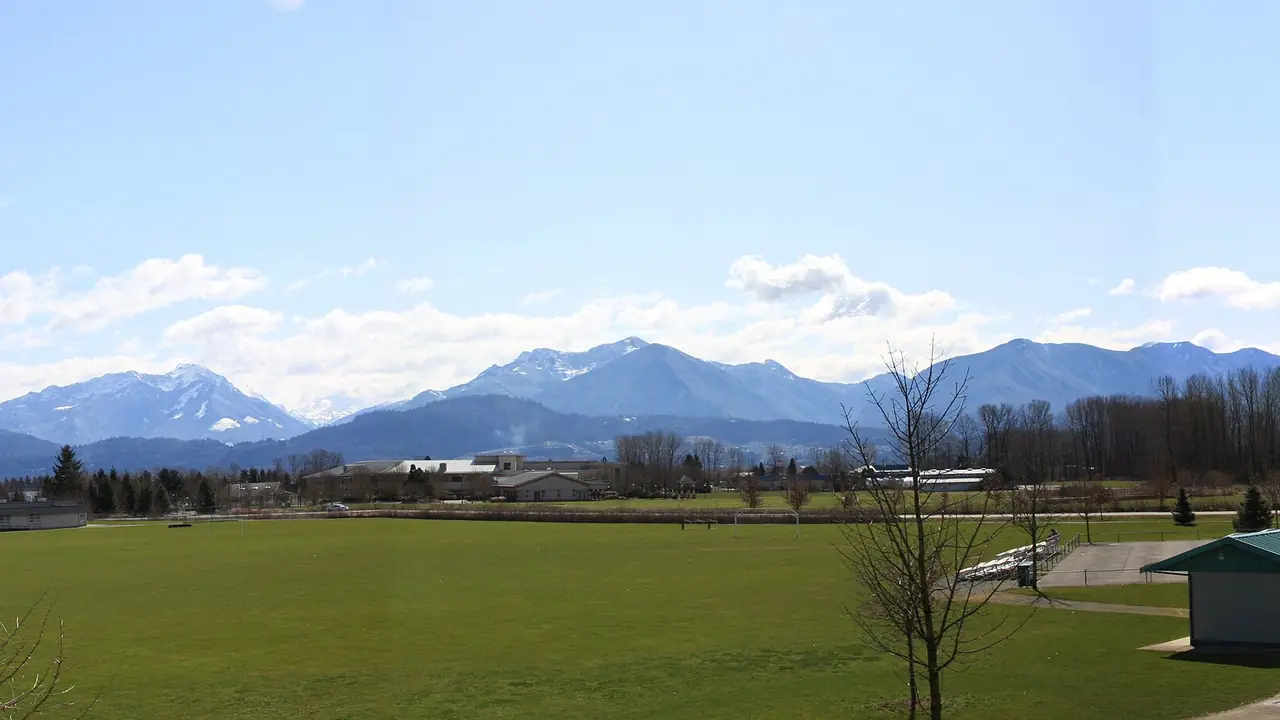
Chilliwack is where the Fraser Valley runs out. East of here Highway 1 turns into the Fraser Canyon and Highway 5 climbs the Coquihalla, and the flat, farmable, buildable ground stops. That position gives the city two distinct refrigeration economies sitting beside each other. The first is agricultural, and it is large: this is the densest dairy country in British Columbia, spread across the flats at Greendale, Yarrow and Rosedale, with field vegetables, corn and produce packing alongside it. The second is freight. The Highway 1 industrial strip at the Lickman and Evans exits carries distribution and cold storage that exists precisely because this is the last easy place to put a warehouse before the mountains.
The rest of the commercial refrigeration in the city is ordinary and there is plenty of it. Downtown Chilliwack around Five Corners and Wellington carries independent restaurants, cafes and pubs. Sardis and the Vedder Road corridor hold the supermarkets, chain restaurants and quick service, and they have grown a long way in the last decade. Out at Popkum and along the highway east, the work turns into travel-centre and fuel-stop refrigeration: display coolers, ice machines and quick-service kitchens that run hard through the summer tourist traffic and quietly the rest of the year.
Dairy, and what "large-capacity" actually means here
Bulk milk cooling is the piece of equipment in this city that cannot wait. Raw milk is regulated on temperature: a tank that stops cooling is a compliance problem within hours, not a spoilage problem next week, and it usually announces itself at the worst point in the milking cycle. That is why a Chilliwack dairy call is dispatched as an emergency, and why we ask you to say "bulk tank" on the phone rather than "the cooler is acting up".
Scale is the other thing that separates dairy work from restaurant work. A farm cooling plant is not a bigger version of a walk-in; it is a system with heat recovery, pre-cooling, a defined pull-down time and a duty cycle that has no slack in it. When capacity slips, the tank still gets cold - just not fast enough, and not consistently - so the fault shows up as a creeping compliance risk rather than as a warm room. Diagnosing that means measuring the pull-down against what the system was designed to do, not touching a thermometer and calling it fine.
Field vegetables and corn add a second, sharply seasonal load. Produce coming out of the Greendale flats in mid-summer has to have the field heat pulled out of it fast, and the cooling that does that job runs at capacity for a few weeks a year and idles for the rest. Like every seasonal system, it hides its faults until the week it is fully loaded.
The failures we see most in this community
Wind, which is Chilliwack's signature. When a cold air mass sits over the Interior, it drains down the Fraser Canyon and hits the east end of this valley first. Chilliwack gets strong, cold, persistent outflow wind that the coast never feels, and it does specific damage. It drives cold air through door gaskets and into unsealed penetrations, so freezer floors and door frames ice in a way they do not in Surrey. It loads condenser fans in ways they were never selected for, and it fills fin packs with whatever is loose in a farm yard. On exposed sites it can cool a condenser so hard that head pressure collapses and the system stops feeding the evaporator properly, which presents as a room that will not hold temperature in the middle of a cold snap - a failure that looks, to the operator, like the exact opposite of what should be happening.
Cold snaps on equipment specified for the coast. A great deal of equipment in this city was selected from a catalogue with Lower Mainland design conditions in mind. Chilliwack sees harder winter extremes than Surrey or Langley, so door and frame heaters, drain line heat trace, defrost termination and low-ambient head pressure control all matter more here, and all of them fail silently. Nobody notices a dead frame heater in July.
Farm yard dust and the long approach. Agricultural sites put condensers outdoors in open yards where field dust, chaff and straw circulate freely. That is a coil-cleaning schedule, not a repair problem, and it is the cheapest maintenance money spent on any farm in the valley. The other practical reality of farm work here is access: a dairy is not a strip mall, the plant room is not by the front door, and the useful phone call includes where the technician should actually drive to.
Coverage across Chilliwack
Commercial and agricultural areas of Chilliwack, what operates there, and the refrigeration equipment typically found
| Area |
What is there |
Typical equipment |
| Highway 1 industrial strip |
Food distribution, warehousing and cold-chain freight |
Freezer warehouses, dock cold rooms, parallel racks, remote condensing units |
| Greendale and Yarrow |
Dairy farms, field vegetables and produce packing |
Bulk milk tanks, plate coolers, produce pre-cooling, packing cold storage |
| Sardis and Vedder Road |
Supermarkets, chain restaurants and quick service |
Display and deli cases, parallel rack systems, rooftop condensers |
| Downtown and Five Corners |
Independent restaurants, cafes, pubs and bakeries |
Walk-in coolers, reach-ins, prep tables, bar and draft systems |
| Rosedale and Highway 9 |
Agricultural operations and highway commercial toward Agassiz |
Farm cold storage, bulk milk cooling, small walk-ins |
| Chilliwack airport and east industrial |
Light industrial, processing and contractor yards |
Cold rooms, condensing units, process cooling |
| Popkum and Highway 1 east |
Travel centres, fuel stops and seasonal tourist food service |
Reach-in display coolers, ice machines, quick-service refrigeration |
| Garrison Crossing and Chilliwack Mountain |
Neighbourhood grocery, cafes and restaurants |
Reach-ins, undercounters, small walk-ins, display cases |
Why Chilliwack gets a 30 to 45 minute window
Chilliwack is the furthest of our Fraser Valley communities from base and it still carries a 30 to 45 minute window, the same as Maple Ridge, because the entire drive is Highway 1 at highway speed with no bridge, no bottleneck and no climb. The exits do the rest: Lickman and Evans for the industrial strip, Yale Road for downtown, Vedder for Sardis, Prest and Annis for the east side. Where the window stretches is off the highway - the far end of the Greendale flats, Yarrow, or up Highway 9 toward Rosedale - and it is better to say so than to average it away.
Those windows are service targets under normal conditions, not guarantees. Snow, a Highway 1 closure, canyon outflow conditions or two emergencies at once will move them. Where you need a contractual response time - and a dairy or a distribution freezer usually should - that belongs in a written priority service agreement. See our terms of service.
What we work on here
Bulk milk tanks and plate coolers, farm cooling plant and heat recovery, produce pre-cooling and packing-house cold storage, freezer warehouses and dock cold rooms, parallel rack systems, remote and rooftop condensing units, walk-in coolers and freezers, display and deli cases, reach-ins and prep tables, bar and draft systems, ice machines, and commercial kitchen ventilation. We service equipment regardless of who installed it. Full detail is on the emergency repair page and the walk-in installation page, and the pricing and lead-time questions are answered on our FAQ.
Check us before you call
You should not have to take a contractor's word for any of this. Three public records let you check BC Freezer in a few minutes, and they work just as well for any other contractor you are comparing us with.
-
Licence
Technical Safety BC register
Refrigeration contractors in BC must be licensed by Technical Safety BC. The public register shows each contractor's licence number, status and any enforcement action.
Search the register
-
Coverage
WorkSafeBC clearance letter
A clearance letter confirms a business is registered with WorkSafeBC and its premiums are in good standing. Most can be pulled online at no charge.
Get a clearance letter
-
Reviews
Google Business Profile
Reviews there are written by customers and published by Google, not by us. Read them before you book.
Read our Google reviews