What commercial refrigeration in Mission actually looks like
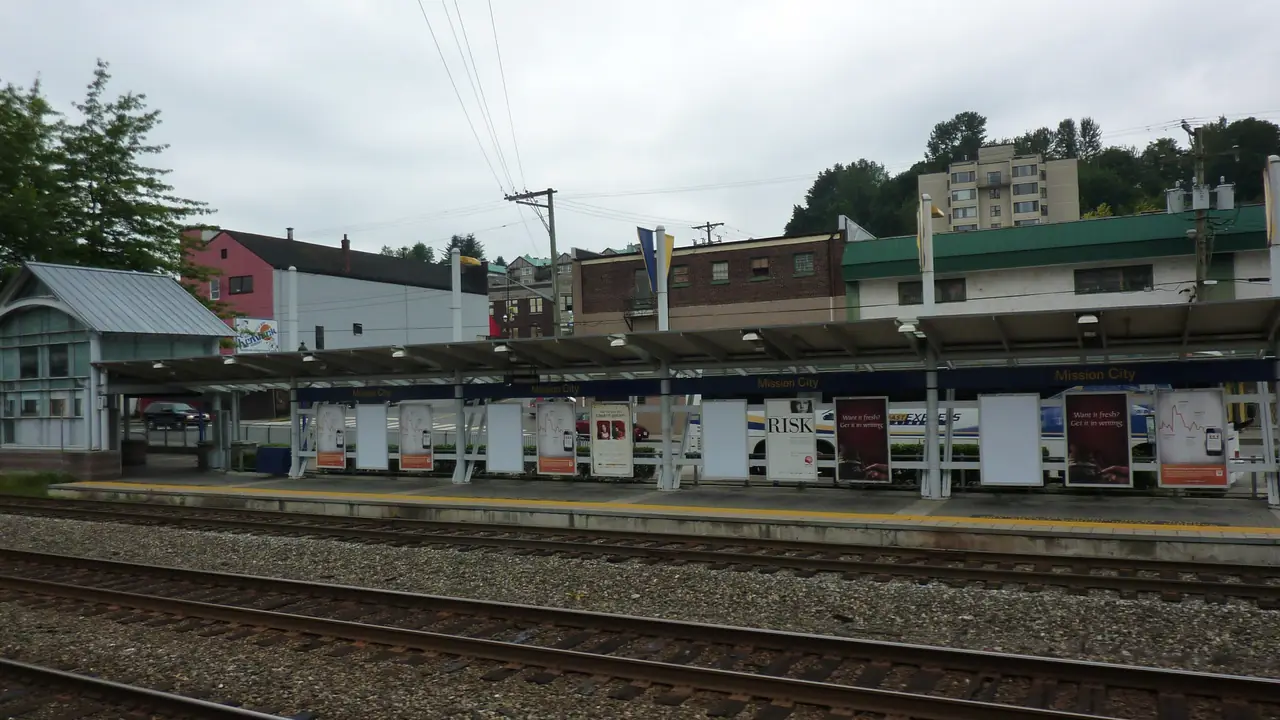
Mission is a river town on the wrong side of the river, at least from a service contractor's point of view. It sits on the north bank of the Fraser, directly across from Abbotsford, and Highway 11 over the Mission Bridge is the only crossing between the two. That single fact explains the published arrival window better than any sentence about fleet size could: Mission is closer to our Surrey base than Chilliwack is in a straight line, and it carries a longer window - 35 to 50 minutes - because every route in ends at the same bridge or takes the long way around on Highway 7.
The town centre is the other thing a contractor notices immediately. Mission City is built up a steep south-facing hillside above the river, and the commercial buildings along First Avenue and the streets above it are stacked into that slope. The practical consequence is that equipment ends up in unusual places: a condenser at street level on the uphill side with the kitchen it serves a full storey below, long vertical line runs between the two, condensate drains that have to be pumped rather than fall, and rooftop units reached from a lane rather than a parking lot. Diagnosing a hillside building starts with finding out where the equipment actually is, and that is not a joke - on more than one site the condenser is not on the same street as the business.
Beyond the core, the district spreads a long way. Silverdale and the industrial land along the Lougheed to the west carry light industrial and food production. Cedar Valley north of the core is residential with the neighbourhood grocery and convenience that comes with it. East along Highway 7 the flats at Hatzic and Dewdney are farm country - blueberries, dairy and poultry - with the cold storage that follows, and the highway runs on to Deroche and Lake Errock, where the commercial refrigeration is small grocers, rural pubs and seasonal resort food service.
Pubs, taprooms and brewery cooling
Mission's pub and taproom trade is dense for a district this size, and beer is a refrigeration problem from the tank to the tap. There are three separate cold systems in most of those buildings and they fail in different ways. The keg and cold room is an ordinary walk-in with an unusually heavy door traffic pattern. The draft line cooling - a glycol trunk or a forced-air run from cooler to tower - is the one that generates the complaint the customer actually notices, because warm line means foaming pours long before anything is measurably wrong in the cooler. And in a working brewery, glycol is doing fermentation temperature control: jacketed tanks held at a set point, then a hard load spike when a tank is crash-cooled.
That last one is worth understanding even if you only run a taproom. Glycol systems are sized around a duty cycle, and adding a tank, adding a cold-crash, or losing a little pump flow to a fouled strainer shows up as the whole system slowly failing to hold rather than as one component breaking. When a brewery calls about temperature, the first question is what changed in the schedule, not which part failed.
The failures we see most in this community
Drainage, uphill and down. A walk-in on a hillside rarely has a gravity drain to anywhere useful, so condensate gets pumped. Condensate pumps are the cheapest component in the room and the most likely to be the actual fault: the pump fails, the pan overflows, the room floods and ices, and what gets reported is a refrigeration problem. In the same buildings, the long runs mean a blocked or frozen drain line backs up a long way before anyone sees water.
Damp and shade. Mission is one of the wetter places in the Fraser Valley and the hillside puts a lot of commercial equipment in permanent shade. Outdoor condensers in a shaded lane grow moss and algae in the fin pack rather than collecting dust, and an air-cooled condenser with a green fin pack is losing capacity just as surely as a dirty one. Electrical enclosures on those sites are the other recurring find - a perished gasket, water into a contactor box, and a unit that will not start on the first cold morning.
Elevation, within one district. The river flats and Cedar Valley are not the same climate. A few hundred metres of elevation is the difference between rain and wet snow, and between a freezing night and a mild one, which is why door and frame heaters, defrost termination and low-ambient head pressure control fail up the hill in weeks when everything down by the river is fine. If your equipment is above the town centre, its winter is a month longer than the forecast for "Mission" suggests.
Coverage across Mission
Commercial areas of Mission, what operates there, and the refrigeration equipment typically found
| Area |
What is there |
Typical equipment |
| Mission City centre |
Pubs, taprooms, restaurants and cafes on the hillside |
Keg and cold rooms, draft line cooling, back-bar coolers, ice machines |
| Industrial park and west Lougheed |
Light industrial, food production and distribution |
Cold rooms, remote condensing units, freezer storage |
| Highway 7 and 11 junction |
Supermarkets, quick service and fuel-centre convenience |
Display and deli cases, reach-in coolers, rooftop condensers |
| Cedar Valley |
Neighbourhood grocery, convenience and cafes |
Reach-ins, undercounters, small walk-ins |
| Silverdale |
Highway commercial and growth-area retail |
Walk-in coolers, display cases, ice machines |
| Hatzic and Dewdney flats |
Blueberry, dairy and poultry operations |
Farm cold storage, bulk milk cooling, produce pre-cooling |
| Deroche and Lake Errock |
Rural grocers, pubs and seasonal resort food service |
Walk-ins, reach-in display coolers, ice machines |
| Stave Falls and Steelhead |
Rural commercial and small food service |
Reach-ins, small walk-ins, undercounters |
Why Mission gets a 35 to 50 minute window
Because of the bridge. Highway 11 across the Fraser is the only direct connection between Mission and Highway 1, so a Mission call is an Abbotsford drive plus a river crossing plus the climb into town - which is why the published window here is 35 to 50 minutes against Abbotsford's 25 to 40, despite the two places facing each other across the water. Highway 7 west toward Maple Ridge is the alternative and it is slower. The east end of the district is further again: Deroche and Lake Errock are a genuine drive past Hatzic, and we would rather schedule those honestly than promise a town-centre window and arrive late.
Those windows are service targets under normal conditions, not guarantees. A Mission Bridge closure, snow on the hill, or two emergencies at once will move them, and a bridge closure moves them a long way. Where you need a contractual response time, that belongs in a written priority service agreement. See our terms of service.
What we work on here
Keg and cold rooms, draft line cooling and back-bar systems, walk-in coolers and freezers, reach-ins and undercounters, prep tables, display and deli cases, rooftop and remote condensing units, condensate pump and drain work, farm cold storage, bulk milk cooling, produce pre-cooling, ice machines, and commercial kitchen ventilation. We service equipment regardless of who installed it. Full detail is on the emergency repair page and the walk-in installation page, and the pricing and lead-time questions are answered on our FAQ.
Check us before you call
You should not have to take a contractor's word for any of this. Three public records let you check BC Freezer in a few minutes, and they work just as well for any other contractor you are comparing us with.
-
Licence
Technical Safety BC register
Refrigeration contractors in BC must be licensed by Technical Safety BC. The public register shows each contractor's licence number, status and any enforcement action.
Search the register
-
Coverage
WorkSafeBC clearance letter
A clearance letter confirms a business is registered with WorkSafeBC and its premiums are in good standing. Most can be pulled online at no charge.
Get a clearance letter
-
Reviews
Google Business Profile
Reviews there are written by customers and published by Google, not by us. Read them before you book.
Read our Google reviews