What commercial refrigeration in Merritt actually looks like
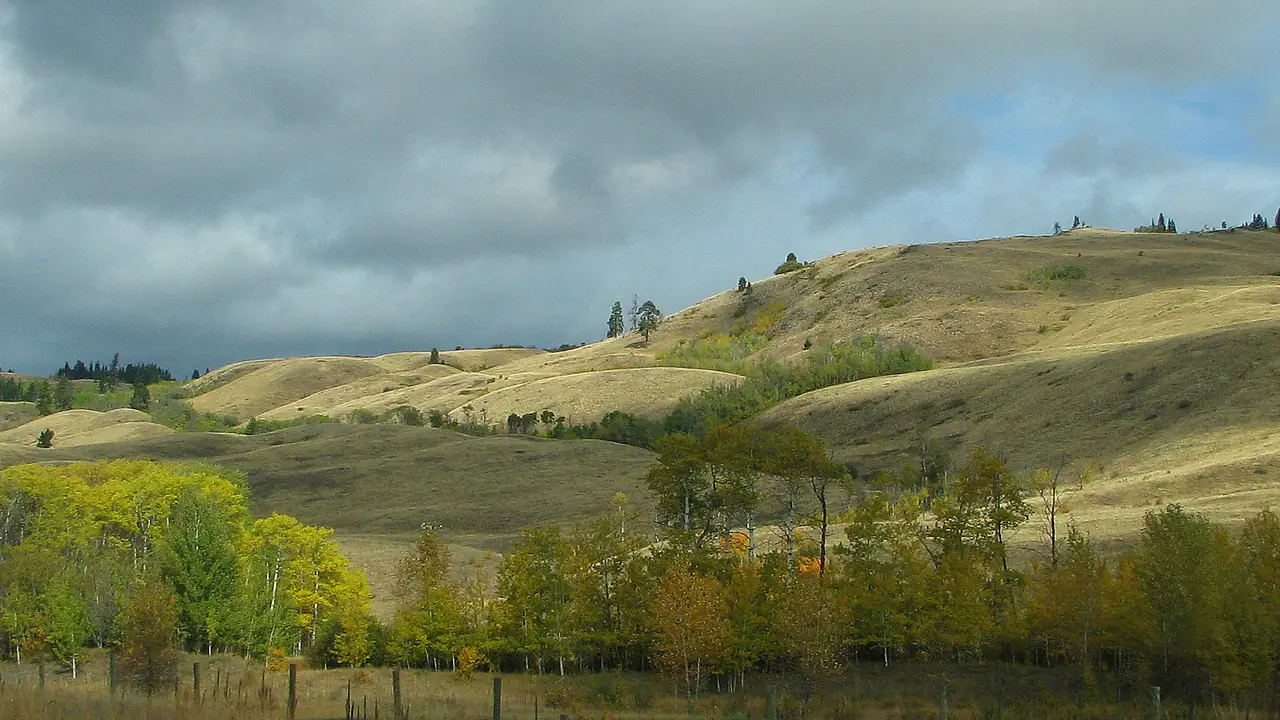
Merritt is where our service area stops being coastal. The Nicola Valley is semi-arid grassland and ranch country, the summers are hot and dry in a way the Fraser Valley never is, the winters are properly cold, and the temperature can swing further between afternoon and dawn than a Surrey box sees between July and October. Everything on this page follows from that, because refrigeration equipment is selected against assumed conditions - and a great deal of the equipment installed in this town was selected from a Lower Mainland catalogue.
Commercially, Merritt is a highway town with a working local economy attached. The Coquihalla, the Okanagan Connector and Highway 8 all meet here, so the biggest single cluster of refrigeration is highway service: truck stops, fuel centres, quick-service kitchens and depot cold storage that exists because this junction is where freight stops. Around that sit the restaurants, pubs, cafes and grocery of a town of a few thousand people, plus ranch and rural operations out through the valley.
Summer: equipment running outside its selection basis
An air-cooled condenser is sized for a design outdoor temperature. Pick a unit against a Lower Mainland summer and it will hold temperature comfortably on the coast; put the same unit in the Nicola Valley and there will be weeks each summer when the afternoon air is substantially hotter than the condition it was chosen for. What happens then is not a mystery: condensing temperature rises, head pressure rises with it, the compressor's capacity falls exactly when the load is highest, run times stretch toward continuous, and discharge temperatures climb into the range where oil breaks down and compressors do not last. The room may still hold - right up until the day it does not.
This is why the first thing we look at on a Merritt site is not the symptom, it is the selection. Is the condenser actually big enough for here? Is it in a location that recirculates its own hot air off a wall or a roof deck? Is it clean, given that this is dust country? A condenser with an extra row, a better location or, in some cases, a fan speed control does more for a hot-climate site than a series of emergency repairs will. Wildfire smoke seasons add a second layer to the same problem, because smoke particulate and ash foul a coil quickly and quietly.
Dry air: why your defrost is probably wrong
Frost on an evaporator comes from moisture in the air. Interior air holds much less of it than coastal air does, so a cooler or freezer in Merritt frosts more slowly than the identical box in Abbotsford. That matters because most defrost schedules are set at installation to a generic number of cycles a day, and a generic number is a coastal number. Over-defrosting is not harmless: every unnecessary defrost pushes heat into the box, raises product temperature, costs energy twice - once for the heater and once to pull the room back down - and shortens the life of heaters and terminations.
The fix is not glamorous. It is checking how fast the coil actually frosts on your site, in your season, and setting cycles and termination to match. It is one of the cheapest genuine efficiency improvements available on Interior equipment, and almost nobody does it.
Winter: the opposite failure
Then the valley turns cold, and the same equipment has the reverse problem. A system needs a minimum pressure difference to push refrigerant through its expansion valve; when the outdoor air is very cold the condenser rejects heat too well, head pressure collapses, the valve stops feeding the coil properly and the room drifts warm in the middle of a freezing night. Merritt sees that harder and for longer than anywhere in the Fraser Valley. Alongside it: crankcase heaters that nobody has verified, oil that is thicker than the compressor was designed around at start-up, drain lines and heat trace that freeze, and door and frame heaters that failed silently in July. All of them are winter-only faults and all of them are cheap to find in October.
Transport, depots and the flood question
Because this is a freight junction, some of the cold storage in Merritt is part of a transport chain rather than a retail one - dock-level cold rooms and depot freezers where product is staged between trucks. That work has the same door-infiltration problem as any loading bay, sharpened by the temperature difference: a freezer door open to 35 degree air takes in far more moisture and heat per minute than the same door open to a 22 degree Surrey afternoon. Strip curtains, dock seals and defrost strategy matter more here, not less.
The other thing worth planning for is interruption. The Coldwater River flooded in November 2021 and the city was evacuated; more routinely, the Coquihalla closes and the valley is cut off from the coast for hours or days. If your cold storage carries stock you could not replace quickly, the questions to answer while the roads are open are which rooms a generator actually carries, how long each room holds with the door shut, and what you would move first. We will walk through that on a maintenance visit.
Coverage in Merritt and the Nicola Valley
Commercial areas of Merritt and the Nicola Valley, what operates there, and the refrigeration equipment typically found
| Area |
What is there |
Typical equipment |
| Highway 5 and 97C interchange |
Truck stops, fuel centres and quick service |
Display coolers, grab-and-go cases, ice machines, kitchen refrigeration |
| Merritt town centre |
Restaurants, pubs, cafes and grocery |
Walk-in coolers and freezers, reach-ins, prep tables, bar and draft systems |
| Industrial and logistics yards |
Freight staging, depot cold storage and light industrial |
Dock cold rooms, depot freezers, remote condensing units |
| Lower Nicola and Collettville |
Small commercial, rural grocery and food service |
Reach-ins, undercounters, small walk-ins |
| Nicola Valley ranch country |
Ranching and rural operations |
Farm and ranch cold storage, chest freezers, small cold rooms |
| Highway 5A and Nicola Lake |
Resorts, campgrounds and seasonal food service |
Display coolers, ice machines, small walk-ins |
| Highway 8 west |
Rural commercial toward Spences Bridge |
Reach-ins, chest freezers, small cold rooms |
How service works at this distance
We do not publish a minute-based arrival window for Merritt, and that is deliberate. Getting here from the Lower Mainland means the Coquihalla, and the honest answer to "how fast can you be here" depends on the pass, the weather and where the nearest technician is that morning. Printing a number would make the page look more confident and would be worth less than nothing the first time it was wrong.
What we do instead is what the homepage says: scheduled work plus rapid on-call. Scheduled means installation, replacement and planned maintenance booked on a route, grouped so one trip covers several pieces of equipment or several sites. On-call means you phone dispatch, describe what is happening, and get told the real timing rather than an average. In a valley this far from a parts counter, that also means the phone call matters: equipment make and model, what the controller reads, the product temperature and what changed, so that whatever comes over the pass arrives with the right part on board.
Where you need a committed response time rather than a best effort, that belongs in a written priority service agreement - and in this valley that is worth more than it is on the coast. See our terms of service.
What we work on here
Walk-in coolers and freezers, dock cold rooms and depot freezers, display and grab-and-go coolers, reach-ins and undercounters, prep tables, remote and rooftop condensing units, condenser replacement and re-siting for hot-climate operation, defrost control setup, low-ambient head pressure control, bar and draft systems, ice machines, ranch and rural cold storage, and commercial kitchen ventilation. We service equipment regardless of who installed it. Full detail is on the emergency repair page and the walk-in installation page, and the pricing and lead-time questions are answered on our FAQ.
Check us before you call
You should not have to take a contractor's word for any of this. Three public records let you check BC Freezer in a few minutes, and they work just as well for any other contractor you are comparing us with.
-
Licence
Technical Safety BC register
Refrigeration contractors in BC must be licensed by Technical Safety BC. The public register shows each contractor's licence number, status and any enforcement action.
Search the register
-
Coverage
WorkSafeBC clearance letter
A clearance letter confirms a business is registered with WorkSafeBC and its premiums are in good standing. Most can be pulled online at no charge.
Get a clearance letter
-
Reviews
Google Business Profile
Reviews there are written by customers and published by Google, not by us. Read them before you book.
Read our Google reviews